
Macarena López-Cordón is the CEO of the “Entre Mujeres Association” and “Soulem”, a social initiative dedicated to supporting women who have survived violence in all its forms. Together, we developed a brand identity project to provide the organization with a visual identity that aligns with its mission, helping it reach a wider audience more effectively.
Tag: Impact
Knom &. A few minutes with Blanca Marín

Blanca Marín Riaño, Marketing and Communication Director at Universidad Villanueva, was responsible, alongside Knom, of the creation of the University’s new brand. A project of great strategic impact, which positioned the University on the top level of the educational field. Territory, personality, strategic platform, tone of voice, their own methodology and visual identity were some of the key points on which we worked for the University and its brand ecosystem.
Knom &. A few minutes with Pablo Guinot

Pablo Guinot is CEO of REMO Mobility, the startup of charging points for sustainable vehicles born in 2019 with the aim of positioning itself as the future of mobility. A project for which we worked for since its beginnings, which allowed us to define together such crucial aspects as vision, brand values or main target audiences.
Knom &. A few minutes with Andrea Jarabo

Andrea Jarabo is the Communication and Advocacy Manager at Provivienda, the association working to guarantee the right to housing for the past 30 years, and behind Lumvra, the first nationwide Housing Association in Spain.
Is there a loophole for brands on Black Friday?
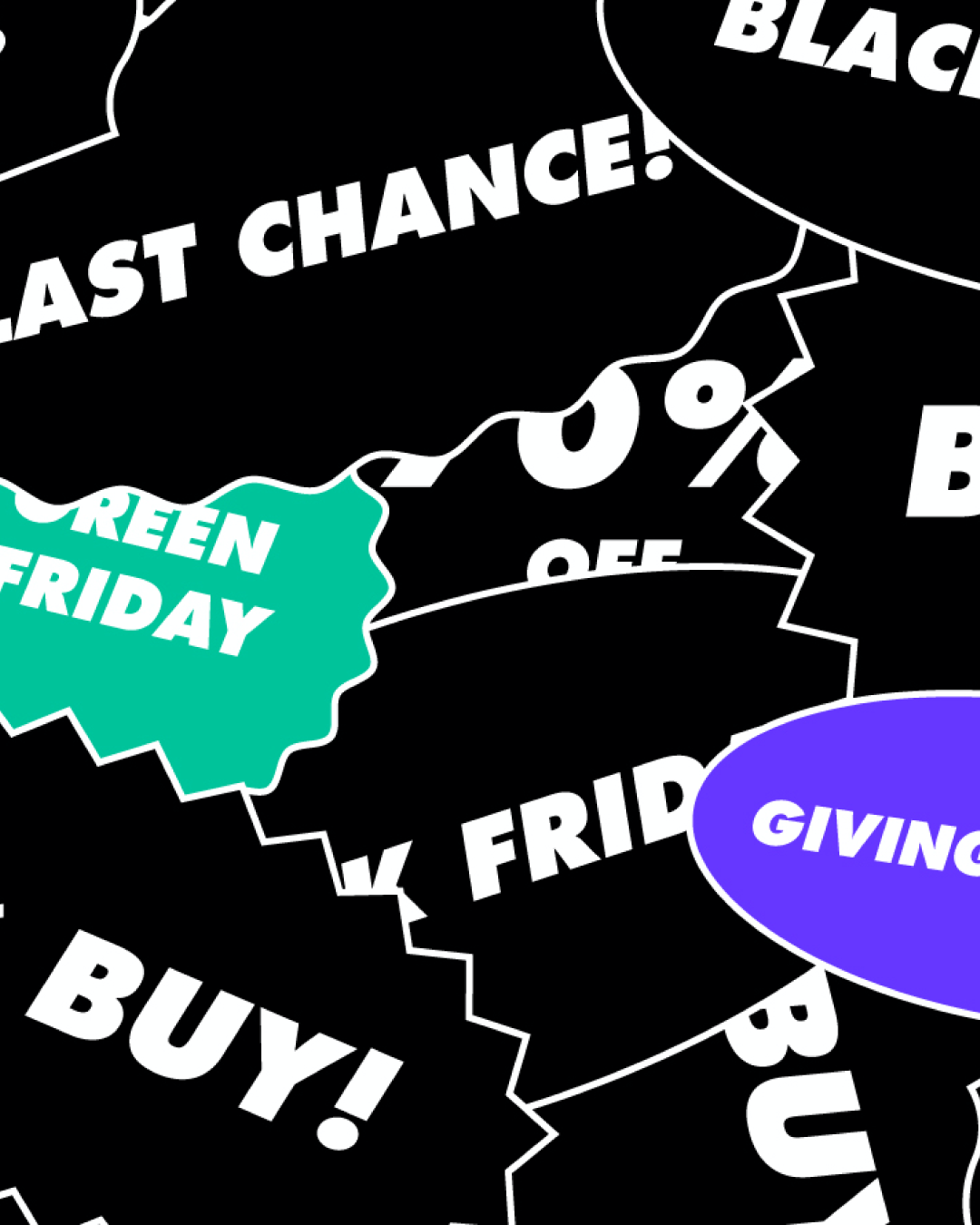
In the face of compulsive consumption, awareness and education.
This latest edition of Black Friday has also been marked by the pandemic. Although not all, there are many consumers who, faced with delayed shipments and the feared shortage of items, have put aside their environmental conscience and run for discounts that would make the bill a little lighter on Epiphany.
For this very reason, it is difficult for some brands not to jump on the bandwagon of this day of sales and promotions that year after year breaks sales figures and kicks off the Christmas campaign.
However, it is precisely on days like Black Friday when brands must be brave and take the opportunity to reaffirm their values and position themselves firmly in the minds of their consumers.
In fact, more and more initiatives are emerging in this regard under names such as ‘Green Friday’, which promotes the circular economy from the second-hand market; the ‘Buy Nothing Day’, which calls to stop consuming for 24 hours; or ‘Giving Tuesday’, which promotes solidarity and generosity only one day after ‘Cyber Monday’.
But, beyond creating ‘anti Black Friday’ alternatives, this movement tries to advocate for a conscious consumption, where the driver is not ‘the bargain’ or the ‘limited time’ but the conviction that this is the product or brand that best fits the needs of each customer.
A more restrained and fairer consumption where aspects such as local, small commerce and workers’ conditions, among others, come into play against excess.
Why should all brands be inclusive?

Inclusive design removes barriers and truly puts the consumer at the center of its strategy.
Brands are experiencing an evolution in terms of diversity, inclusion and feminism, finally taking a step forward and betting on giving space to groups that were previously underrepresented.
We see how diversity is more present in the communication of brands but also in the design of their products. Ideas that seemed to be niche markets are opening the way to address needs that, although they have always been there, previously escaped either because they were taboo subjects or because they did not fit in with the canons of beauty and the normative bodies of the moment.
A new perspective that, for example, with respect to diversity of origin, translates into product innovations ranging from swim caps for African-American hair to makeup specially designed for South Asian skin tones.
In the same vein, we are witnessing the rise of neutral and non-binary products that are gradually blurring the gender barrier. This phenomenon is affecting not only the fashion industry but also other industries such as cosmetics, traditionally restricted to women.
At a time when the trend is towards authenticity, consumers expect brands that support them as they are.
Why are brands agents of social change?
Brands have an impact on the collective imagination.
The influence that big brands exert on our way of thinking and behaving is undeniable.
For as long as consumer society has existed, brands, through their communication and actions, have contributed to changing perceptions, normalising realities and promoting social progress on numerous occasions. We talk about the incorporation of women into the labour market, gay marriage, the urgency of acting against climate change, etc.
Because brands bring to the fore not only products, but also values and lifestyles. Although it is consumers who push brands to embrace change, it is brands who raise their voices and bring their resources into play.
Brands are a true reflection of the societies in which they live and what they seek, at the end of the day, is for consumers to identify with them. This is a natural evolution, almost a virtuous circle, with brands becoming more and less courageous in launching actions and joining the conversation.
Its aspirational component motivates and empowers to change things. Even if it is for the sake of consumerism, brands ‘sell’ us that everything is within everyone’s reach, wherever you come from. And that has a great mobilising power.
They break taboos, they show open societies, they show our best face and, in short, they tell us that change is possible. In a way, they become an engine of social evolution.
Should we understand cities as brands?

The city-brand as a tool for building a project that connects with insiders and attracts outsiders.
Approaching cities as brands helps us to rethink them and to generate a city project for the future. To establish an umbrella that gives them coherence, that respects the collective imaginary, but that manages to take it a step further. Generating a sense of community and pride of belonging through a narrative that attracts visitors and outside capital, while at the same time being friendly to its neighbours.
In such an interconnected and demanding context, cities today compete fiercely with each other for talent, tourism and investment. And while one of their objectives is undoubtedly to boost competitiveness, it is important not to neglect internal audiences. This means competing also on quality of life and putting people at the centre.
After all, it is people who create prosperity, who start businesses, who invest and who provide talent. Hence, more and more cities are promoting participatory initiatives that involve citizens in transformation and management processes.
The challenge is to build a narrative that truly reflects the idiosyncrasies of the place, a story that residents feel is their own. The city-brand must be the backbone not only of outward-facing communication but also of the city’s day-to-day life and its relationship with its citizens.
Although their public is much more transversal and heterogeneous, cities, like brands, must take care of their values and have a clear position on major issues such as sustainability or health. And, in the same way, they must know what city they are today and what they want to be tomorrow. Define a purpose that will guide them in the long term and help them to be the city that their citizens demand.
Because a city brand, more than a nice and colourful visual system to show off on banners and communications, should position the city and serve as a lever for the future.
Why is good design important in ‘the public’?
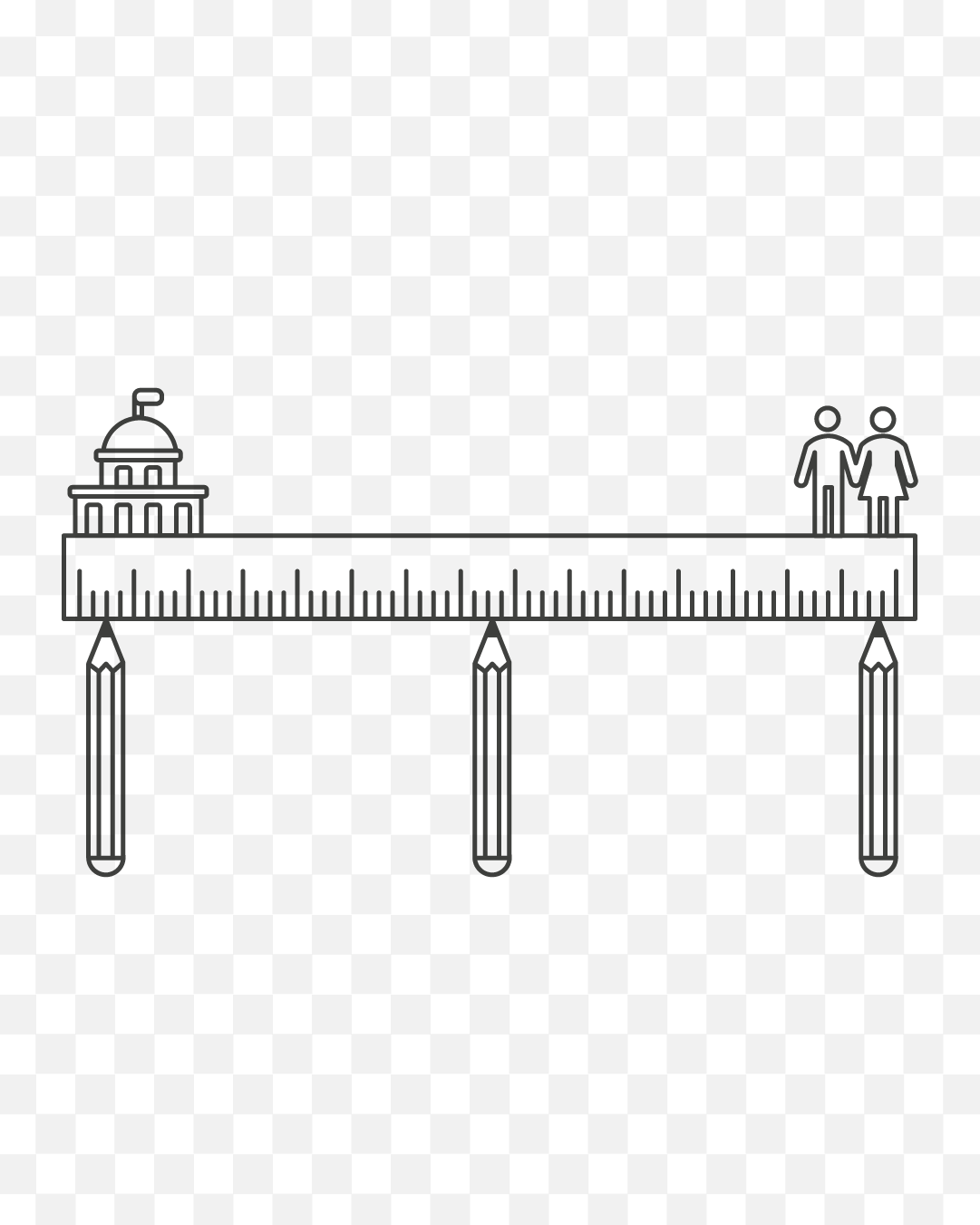
The Administration must serve the public in both form and substance.
If design and good communication are effective and widespread tools in the business environment, why are they not also used in the public sector?
One only has to observe the controversies that arise every time something public is redesigned, with better or worse success, to realise that there are many who consider design as something merely aesthetic. An artistic and accessory element for which public money should not be spent.
In the face of this perception, we must explain that design is much more and that, when used well, it is a very powerful tool for an administration that, in addition to managing, must know how to communicate effectively both what it does and the consequences that its management has on the people.
Because good design is more than just finding a beautiful and creative piece. Good design has an impact on the target audience, increasing the effectiveness of communication. Good design modulates tone and language, facilitating understanding and connecting emotionally. Good design makes procedures intuitive and accessible to all groups regardless of their socio-cultural level. In short, good design reduces the distance between citizens and the administration.
Because, as Louise Downe, the former Design Director of the UK Government, says, the citizen is a user and not a client and, unlike the client, the citizen has no choice but to deal with government services day in and day out.
For this reason, it is essential to redesign the administration in a way that, once and for all, brings public administration closer to the street, facilitates the completion of bureaucratic procedures, encourages political participation and, above all, empowers the citizen.
What can brands do for feminism?

Building the model of society in which we want to live.
Brands are a reflection of the social reality in which we live, but they are also an engine for change. Advertising, branding and communication play a very important role in normalising and implementing the social changes that emerge in our societies.
Although there is always a certain commercial interest behind this, we cannot underestimate the power and influence of brands on the population as a whole, both in reinforcing stereotypes and in breaking them.
Brands and products are part of our daily lives and that is why it is so urgent that, as consultants, designers and communicators, we learn to identify the biases that exist in the system and try to correct them. Being aware of issues such as the fact that the majority of voice assistants are women, or that the ergonomics of cars are designed for the comfort and safety of the male body is the first step in rethinking what we need to redesign in order to have the kind of society we want.
Because while there is a sector of brands that only seeks to jump on the bandwagon of a highly profitable mass movement through small, purely aesthetic and opportunistic gestures, we also find examples of truly committed brands that understand that relevance and real impact come from taking action.
An action that can be materialised in different ways: from attitude, empowering women; from information, giving them visibility and tools; but above all from design, including them in decision-making.
Because although it is great to see us starring in egalitarian spots and advertisements, it is much better to see us directing these campaigns, presiding over companies, and being a point of reference.
Because the present we design shapes the future we will be.